Sun damage is more than a few brown spots. It can include uneven tone, fine lines, rough texture, visible vessels, and deeper changes beneath the skin. The right laser depends on the damage pattern, skin tone, medical history, and recovery expectations.
The World Health Organization identifies ultraviolet radiation as a major cause of premature skin aging and skin cancer. The International Agency for Research on Cancer also classifies solar radiation as carcinogenic to humans. These findings make careful assessment essential, not optional. The American Academy of Dermatology recommends broad-spectrum SPF 30 or higher, because treatment cannot replace daily protection.
So, how to choose the right laser for sun damage? Start with diagnosis, not advertising. A dermatologist may compare fractional resurfacing, vascular lasers, pigment-targeting devices, or nonablative options. Each technology reaches different depths. An aggressive treatment may improve texture, yet increase redness, downtime, or post-inflammatory hyperpigmentation. This risk deserves extra attention in deeper skin tones.
The American Society of Plastic Surgeons tracks laser skin resurfacing as a widely performed cosmetic procedure. However, popularity does not prove suitability. A busy clinic is not automatically a careful clinic. Ask about the device’s wavelength, operator training, test-spot policies, and documented outcomes for your skin type. Request realistic photographs under similar lighting.
Some questions remain difficult. No laser removes every sign of aging, and results vary between individuals. Even experienced clinicians must balance improvement against risk. The following seven tips offer a practical framework for comparing technologies, evaluating providers, and planning safer, more informed treatment for sun-damaged skin.
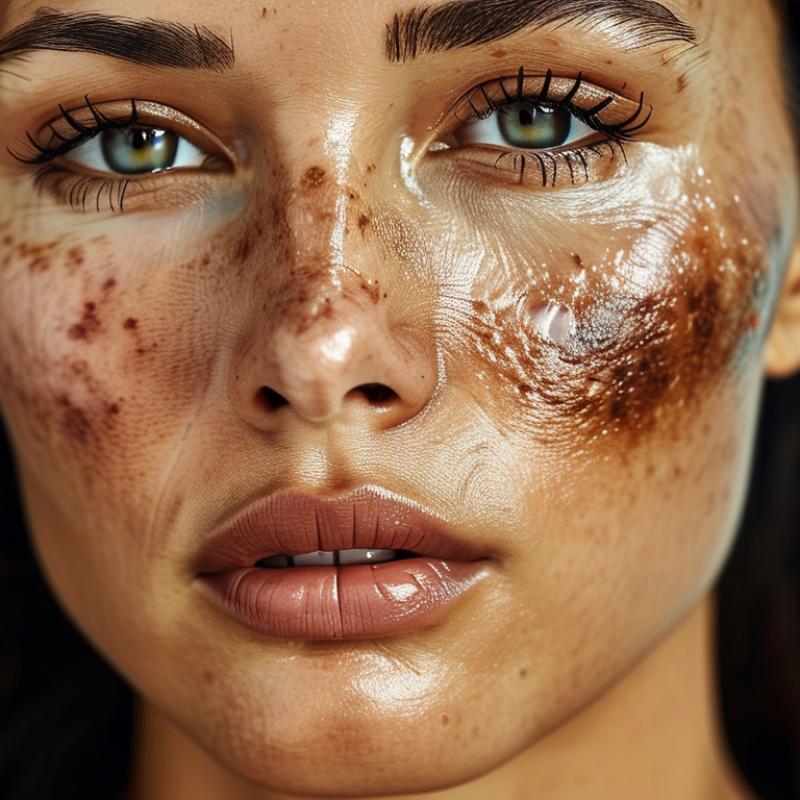
7 Tips for Choosing the Right Laser for Sun Damage
Match Laser Wavelength to the Type of Sun Damage
Sun damage is not one problem, so one laser wavelength cannot treat every concern. Brown freckles and age spots contain excess melanin. Red lines and flushing involve visible blood vessels. Rough texture reflects deeper collagen changes.
A 532 nm laser often targets superficial pigment and small red vessels. It can work well on isolated brown spots. However, darker or recently tanned skin may face a higher risk of post-treatment darkening. A 755 nm wavelength can reach melanin more selectively. It may suit scattered pigmentation, but careful settings remain essential.
For deeper pigment or visible vessels, a 1064 nm wavelength may offer safer penetration in selected skin types. It generally causes less surface heating. Fractional wavelengths, such as 1550 nm or 1927 nm, address uneven texture and diffuse discoloration through controlled skin remodeling. They do not erase every mark.
In practice, the best choice depends on skin tone, tanning history, lesion depth, and medication use. A qualified clinician should examine the area under strong light. A test spot can reveal unexpected pigment changes. I have learned that treating a small region first is often wiser than chasing dramatic results. Sometimes, the most suitable wavelength is not the strongest one.
Choosing the Right Laser for Sun Damage: Compare Ablative and Non-Ablative Resurfacing Depths
Ablative lasers remove part of the epidermis and heat the upper dermis. They can soften deep wrinkles, rough texture, and pronounced sun spots. Healing may involve redness, crusting, and several weeks of sensitivity. Non-ablative lasers preserve the surface while warming deeper collagen. Recovery is usually shorter, but results often require several sessions. The American Society for Dermatologic Surgery’s 2023 consumer survey listed laser and light treatments among commonly requested physician-performed procedures. Demand is high. Depth still matters more than popularity.
Tips: Match the treatment to the damage. Ask whether your concern is pigment, texture, or both. Tip 2: Request a Fitzpatrick skin-type assessment. Darker skin can develop post-inflammatory hyperpigmentation after aggressive treatment. Tip 3: Ask about the device’s wavelength, fluence, and expected penetration depth. “Gentler” does not mean risk-free. Tip 4: Discuss downtime honestly, including work and outdoor exposure. Tip 5: Confirm who performs the procedure and their dermatologic training. Tip 6: Request before-and-after cases with similar skin tones. Tip 7: Build a strict sun-protection plan before treatment.
Clinical reviews consistently describe ablative resurfacing as more powerful, but also more demanding. Non-ablative treatment may suit mild damage or limited downtime. It may disappoint when deep changes need stronger remodeling. That trade-off is easy to underestimate. The American Academy of Dermatology recommends professional evaluation for changing or persistent lesions, because not every sun spot is cosmetic. A cautious consultation should include medication history, healing problems, and realistic limits. Even experienced clinicians must adjust settings carefully; one fixed recipe cannot fit every face.
| Tip | Decision Factor | Laser Category to Compare | Typical Resurfacing Depth | Best-Suited Concerns | Recovery and Key Considerations |
|---|---|---|---|---|---|
| Depth and Treatment-Intensity Comparison | |||||
| 1 | Match the depth to the severity of sun damage. | Non-ablative | Approximately 0.1–0.7 mm in the treated columns, depending on the device, wavelength, pulse settings, and skin response. The outer skin surface remains intact. | Mild to moderate uneven pigmentation, fine lines, early texture changes, enlarged pores, and mild photodamage. | Usually less visible downtime than ablative resurfacing, but several treatment sessions may be needed. Results generally develop gradually as collagen remodeling occurs. |
| 1 | Match the depth to the severity of sun damage. | Ablative | Approximately 0.2–1.5 mm in fractional treatment columns; fully ablative treatment removes a continuous layer of the epidermis and may extend into the superficial dermis. Actual depth varies substantially by settings and treatment area. | More pronounced wrinkles, deeper textural irregularities, acne scars, and significant photodamage when a stronger resurfacing effect is appropriate. | Greater redness, peeling, crusting, and downtime are expected. The risk of infection, prolonged redness, scarring, and post-inflammatory pigment changes is higher than with non-ablative treatment. |
| Seven Practical Selection Tips | |||||
| 2 | Clarify the primary target. | Either, Depending on the Target | Resurfacing depth should be selected according to whether the main concern is pigment, fine lines, surface texture, or deeper wrinkles. | Pigment irregularity may respond to a more superficial approach, while deeper wrinkles and texture irregularities may require stronger fractional resurfacing. | A single laser may not address every concern equally well. Pigment-focused treatment can sometimes worsen discoloration if the skin is irritated or exposed to ultraviolet light afterward. |
| 3 | Consider skin tone and pigmentary risk. | Often Non-ablative First | Lower or moderate energy and fractional coverage may reduce injury to surrounding skin, although no laser treatment is risk-free for pigmentation changes. | People with medium-to-deep skin tones or a personal history of post-inflammatory hyperpigmentation may need a more conservative treatment plan. | A qualified clinician may recommend a test spot, pretreatment for selected patients, strict sun protection, and longer intervals between sessions. Skin tone alone does not determine eligibility. |
| 4 | Balance results against downtime. | Non-ablative | Lower-to-moderate fractional depths generally create controlled dermal heating without removing the entire surface layer. | Mild to moderate photodamage for people who prefer a shorter recovery period and are comfortable with a series of treatments. | Temporary redness, swelling, warmth, dryness, or darkening of treated spots can occur. Makeup and normal activities may be possible relatively soon, depending on the treatment intensity. |
| 5 | Choose fractional or fully ablative treatment carefully. | Fractional or Fully Ablative | Fractional treatment leaves untreated microscopic bridges between treatment columns. Fully ablative treatment removes a more continuous surface layer and generally produces a more intense injury. | Fractional ablative treatment may provide a compromise between improvement and recovery. Fully ablative treatment is reserved for carefully selected cases with substantial texture or wrinkle concerns. | Fractional treatment usually heals faster than fully ablative treatment, but both require detailed wound-care instructions and careful monitoring for infection and delayed healing. |
| 6 | Review wavelength and tissue interaction, not just the word “laser.” | Compare Mechanisms | Common ablative resurfacing wavelengths include approximately 10,600 nm and 2,940 nm. Non-ablative fractional systems may use wavelengths such as approximately 1,440–1,927 nm. These figures describe wavelength, not guaranteed treatment depth. | Wavelength influences how energy is absorbed by water or pigment and how heat is delivered to the skin. The same wavelength can produce different results with different pulse duration, density, and energy settings. | Ask which tissue target is being treated, how the settings will be individualized, and why the selected wavelength is appropriate for the specific skin concern and skin type. |
| 7 | Confirm that suspicious lesions are evaluated before cosmetic resurfacing. | Clinical Assessment First | Resurfacing depth does not replace diagnostic evaluation. A lesion that is changing, bleeding, crusting, painful, or atypical may require examination and possible biopsy before laser treatment. | Cosmetic laser treatment is not a substitute for diagnosis or standard treatment of skin cancer and may alter the appearance of a lesion. | Schedule a qualified skin examination before treatment, particularly when sun damage is extensive or there are actinic keratoses, changing moles, non-healing areas, or a history of skin cancer. |
Laser treatment can soften sun spots, uneven tone, and fine texture. However, the safest choice depends on more than the visible pigment. Fitzpatrick Skin Type estimates how skin responds to ultraviolet exposure, from Type I, which burns easily, to Type VI, which rarely burns. It also helps clinicians consider pigment-change risk after laser treatment.
Tip 1: Identify your current skin type honestly. Recent tanning can make skin appear darker than usual. Ask about childhood sunburns, tanning habits, and previous treatment reactions. Fitzpatrick typing is useful, but it is not a perfect forecast. Skin conditions, medications, and inflammation can change the response.
Tip 2: Discuss post-inflammatory hyperpigmentation before choosing a device. Types IV to VI may face higher risks after heat or injury, especially when treating melanin-rich spots. A qualified medical professional should assess your skin in natural light. They may recommend conservative settings, cooling, or a small test area first. Test spots matter.
Tip 3: Ask how the laser targets pigment and how deeply it heats tissue. Some treatments suit superficial brown spots, while others affect deeper layers. More aggressive treatment is not always better. In practice, experienced clinicians often adjust energy gradually and review healing before repeating treatment. I would question any promise of zero risk. Careful photography, written aftercare, and strict daily sun protection can make results more predictable. Still, individual healing remains difficult to guarantee.
Choosing a laser for sun damage requires more than chasing the highest setting. Fluence, measured in joules per square centimeter, controls delivered energy. Higher fluence may improve pigment or texture, but it can also increase redness, swelling, and post-inflammatory hyperpigmentation. Pulse duration matters too. Short pulses can target pigment rapidly, while longer pulses may spread heat more gradually. The correct balance depends on skin type, lesion depth, wavelength, and cooling. A 2023 ISAPS Global Survey recorded more than three million nonsurgical laser and light procedures worldwide, showing demand remains substantial. Volume does not replace clinical judgment.
Tip: Ask for the planned fluence, pulse duration, and endpoint. “More energy” is not a treatment strategy.
Treatment downtime should be measured honestly. Non-ablative approaches may cause warmth and redness for one to three days. Fractional ablative treatments can require several days of peeling, crusting, or social downtime. A review in Dermatologic Surgery noted wide protocol variation across laser studies, making direct comparisons difficult. That limitation matters. A clinic promising identical recovery for every patient deserves careful questions. My practical preference is a conservative test spot, especially when pigmentation risk is higher. It adds time, but sometimes prevents an expensive setback.
Tip: Photograph your skin in daylight before treatment. Track redness, peeling, and pigment changes daily.
Ask who will adjust settings if your skin reacts unexpectedly. Experience is visible in the follow-up plan, not only the device settings. Fluence numbers cannot be compared safely across different laser systems. Pulse duration cannot be judged alone. Skin response is the real endpoint.
Choosing a laser for sun damage requires more than attractive before-and-after photos. Tip 1: Verify FDA clearance. Ask for the device’s exact 510(k) number and cleared indication. Clearance means substantial equivalence, not guaranteed results. The FDA also warns that marketing language may exceed a device’s authorized use. Check the FDA database yourself.
Tip 2: Demand clinical evidence. Look for peer-reviewed trials involving your skin type, treatment area, and comparable sun damage. Tip 3: Examine the outcomes. A 2023 review in the Journal of Cosmetic Dermatology found that laser results vary with wavelength, energy settings, and patient characteristics. Small studies can still be useful, but they deserve caution. Tip 4: Assess provider expertise. Confirm medical credentials, laser-specific training, and recent treatment volume. The American Society for Dermatologic Surgery’s 2023 Consumer Survey reported that 70% of respondents were considering a cosmetic procedure, increasing the need for informed provider selection.
Tip 5: Discuss pigment risk honestly. Darker or recently tanned skin may face higher risks of post-inflammatory hyperpigmentation. Tip 6: Request a written plan covering settings, recovery, sun protection, and follow-up. Tip 7: Ask how complications are handled. A test spot may help, though it cannot predict every reaction. I would also question dramatic promises. Even strong evidence cannot guarantee identical results, and clinic experience may vary more than advertised.
Verify FDA clearance, clinical evidence, treatment wavelength, skin type considerations, provider expertise, realistic outcomes, and aftercare requirements before choosing a laser procedure.
The chart compares nominal wavelengths commonly associated with laser categories used in dermatologic procedures. Wavelength alone does not determine safety or effectiveness; the appropriate choice depends on the condition being treated, skin type, treatment settings, clinical evidence, and the qualified provider’s assessment.
: No. Brown spots, red vessels, and rough texture involve different skin changes. One wavelength may not address them all.
A 532 nm wavelength often targets superficial pigment. It may also treat small visible vessels. Darker or tanned skin needs extra caution.
It may selectively reach melanin in scattered pigmentation. Careful settings remain important. Stronger treatment is not automatically better.
A 1064 nm wavelength may penetrate more deeply in selected skin types. It usually creates less surface heating, but results vary.
Fractional wavelengths, such as 1550 nm or 1927 nm, encourage controlled skin remodeling. They may improve texture and diffuse discoloration. They cannot erase every mark.
Fluence controls delivered energy. Pulse duration controls how quickly heat reaches the target. Higher energy can increase redness, swelling, and darkening.
Non-ablative treatment may cause warmth and redness for one to three days. Ablative treatment can involve peeling, crusting, and several recovery days.
A qualified clinician should examine the area under strong light. A test spot can reveal unexpected pigment changes. Small areas deserve patience.
Ask about fluence, pulse duration, cooling, expected downtime, and follow-up care. Also ask who will adjust settings if your skin reacts unexpectedly.
Not necessarily. Skin tone, tanning history, lesion depth, and medications affect safety. I would question dramatic promises. Conservative treatment may prevent an expensive setback.
Choosing the right laser for sun damage begins with understanding the specific concern being treated, such as uneven pigmentation, fine lines, rough texture, or visible redness. The laser wavelength should match the target, while the choice between ablative and non-ablative resurfacing depends on how deeply the skin needs to be treated and how much recovery time is acceptable. A patient’s Fitzpatrick skin type is also important, since darker or more pigment-prone skin may face a higher risk of temporary or lasting color changes.
To understand how to choose the right laser for sun damage, patients should also compare fluence, pulse duration, expected downtime, and the provider’s treatment approach. Higher energy is not always better; settings should be tailored to the skin’s condition, sensitivity, and healing ability. Before treatment, confirm that the device has appropriate regulatory clearance, review credible clinical evidence, and select a qualified provider with relevant experience. A careful consultation can help balance visible improvement, safety, comfort, and realistic results.
