Deep wrinkles are not merely surface lines. They often reflect collagen loss, repeated facial movement, sun exposure, and reduced skin elasticity. For many clinics, laser resurfacing offers a controlled way to renew damaged skin and stimulate collagen production. Yet results depend on laser type, treatment depth, patient skin tone, and clinical technique.
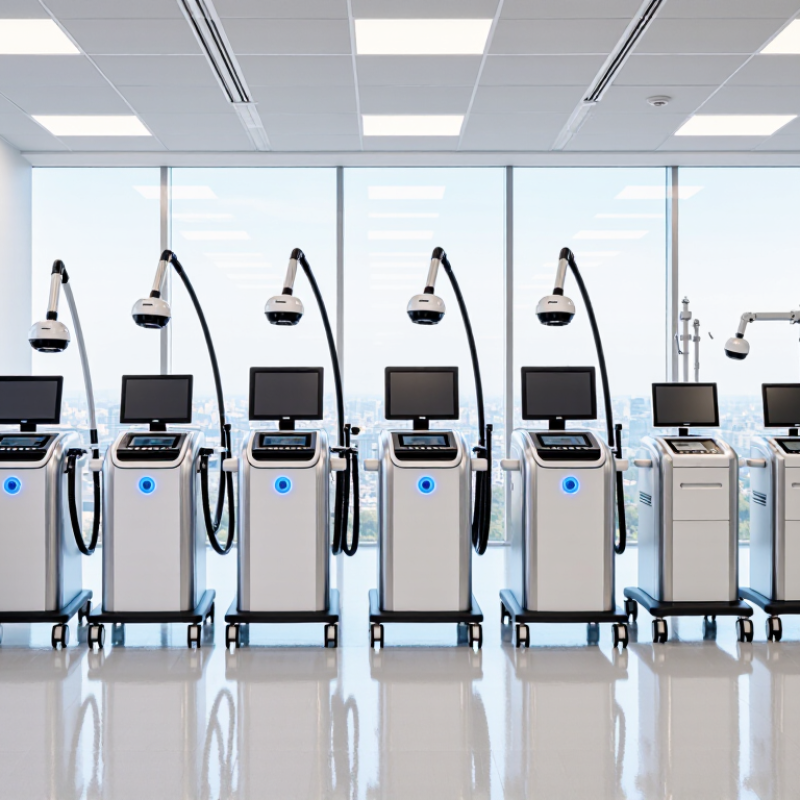
A practical question remains: can laser skin resurfacing remove deep wrinkles? In many cases, fractional CO2 and Er:YAG systems can soften pronounced wrinkles, acne scars, and uneven texture. They rarely erase every line permanently. That distinction matters. This guide introduces China’s top 10 laser resurfacing machines for deep wrinkles, focusing on technical design, treatment flexibility, safety features, and clinical usability.
The comparison considers wavelength, fractional scanning, cooling systems, pulse control, and energy adjustment. These details affect both treatment precision and recovery time. A well-designed handpiece should deliver consistent energy across the treatment area. Small irregularities may create uneven results.
Real clinical experience also matters. A powerful machine cannot replace proper diagnosis, conservative settings, or trained supervision. Skin types vary, and darker skin may require careful parameter selection to reduce pigmentation risks. Clinics should verify certifications, service support, operator training, and local compliance before purchasing equipment.
Some claims in the market sound too certain. They deserve closer review. Machine performance can differ from brochure promises, especially after months of heavy use. The following overview aims to provide a balanced starting point for clinics, distributors, and qualified skincare professionals comparing advanced resurfacing platforms.
Deep wrinkles form when collagen, elastin, and skin thickness gradually decline.
Laser resurfacing uses controlled light energy to heat or remove selected skin layers. This process activates wound healing and encourages new collagen production.
Ablative lasers remove part of the surface. Non-ablative lasers heat deeper tissue without removing the outer layer. Fractional systems create tiny treatment columns, leaving untreated skin between them. Recovery is often faster.
Not magic.
Common treatment types include fractional CO2, Er:YAG, and non-ablative fractional resurfacing.
CO2 treatments usually reach deeper and may soften pronounced lines more effectively. Er:YAG allows precise surface removal with potentially shorter recovery. Non-ablative options may suit milder wrinkles or patients seeking less downtime.
Full-field treatment can be stronger, but redness and healing may last longer. Machine quality matters, yet settings matter more.
A qualified dermatologist should examine wrinkle depth, skin tone, texture, sun damage, and medical history before treatment. Darker skin may need cautious settings because pigment changes can occur.
Eye protection is essential. Temporary redness, swelling, dryness, and sensitivity are common. Results develop gradually over several months. One session may not be enough.
In practice, patients sometimes expect a completely smooth face, which is unrealistic. Good treatment improves texture; it does not erase aging. Photographs, conservative planning, and honest follow-up make comparisons more reliable.
Controlled light energy heats or removes selected skin layers. This stimulates wound healing and new collagen production. It improves texture. It does not stop aging.
Ablative treatments remove part of the surface. Non-ablative treatments heat deeper tissue without removing the outer layer. Fractional systems create tiny treatment columns. Untreated skin remains between them, often shortening recovery.
Deeper fractional carbon-dioxide treatments may soften strong lines more effectively. Erbium-based treatments offer precise surface removal. Non-ablative options may suit milder wrinkles or shorter downtime. The strongest option is not always the wisest.
Redness, swelling, dryness, and sensitivity are common temporarily. Deeper treatments may cause visible redness for several days or longer. Full-surface treatment can require more healing time. Recovery varies greatly.
Usually, no. Several sessions may be needed, especially with gentler treatments. Results often develop gradually over several months. A completely smooth face is an unrealistic expectation.
The clinician should review wrinkle depth, skin tone, texture, sun damage, and medical history. Darker skin may require conservative settings. Pigment changes can occur. Eye protection is essential.
Treatment depth matters more than advertised power. Pulse duration, energy level, cooling, and spot density affect results. A precise device may perform poorly with unsuitable settings. The catalogue can mislead.
Request verified safety certificates, registration documents, and testing records. Check serial numbers through official databases. Ask about installation, training, warranty limits, and replacement parts. A low purchase price may hide costly handpiece repairs.
Put calibration intervals, cooling-system cleaning, and spare-part access in writing. Ask for service records and remote diagnostic procedures. Confirm engineer response times and escalation steps. Test energy stability, alignment, emergency shutoff, and treatment logs before acceptance. A polished certificate is not enough.
This guide explores China’s top 10 laser resurfacing machines for treating deep wrinkles, beginning with the basic principles of laser skin resurfacing and the differences between ablative and non-ablative treatment approaches. It reviews key specifications such as laser type, wavelength, energy settings, pulse duration, spot size, cooling systems, and treatment depth, helping readers compare how each machine may support wrinkle reduction, skin renewal, and collagen stimulation.
It also examines safety features, clinical applications, operator training, and essential buying considerations, including certifications, total cost, maintenance requirements, replacement parts, and supplier support. The central question, “can laser skin resurfacing remove deep wrinkles,” is addressed realistically: results depend on wrinkle depth, skin condition, treatment settings, individual response, and professional care. With appropriate patient assessment, controlled procedures, and proper aftercare, these systems may significantly soften deep wrinkles, although outcomes vary and complete removal is not guaranteed.

 Monae Beauty